What Futures do we actually want?
The Clark Humanities Museum at Scripps College invited Fabrice Guerrier as a visiting artist to speak to a CORE classroom co-taught by Westenley Alcenat, Assistant Professor of History and Africana Studies, and Ryan Milov-Cordoba, Assistant Professor of Ancient Studies/Classics. The class, titled The Classical Transatlantic: The Moroccan Hlayqi and the West African Griot, hosted a salon discussion in which Fabrice explored his artistic practice centered around Frank the Giraffe — a visual tool for imagining the future and the ecological self.
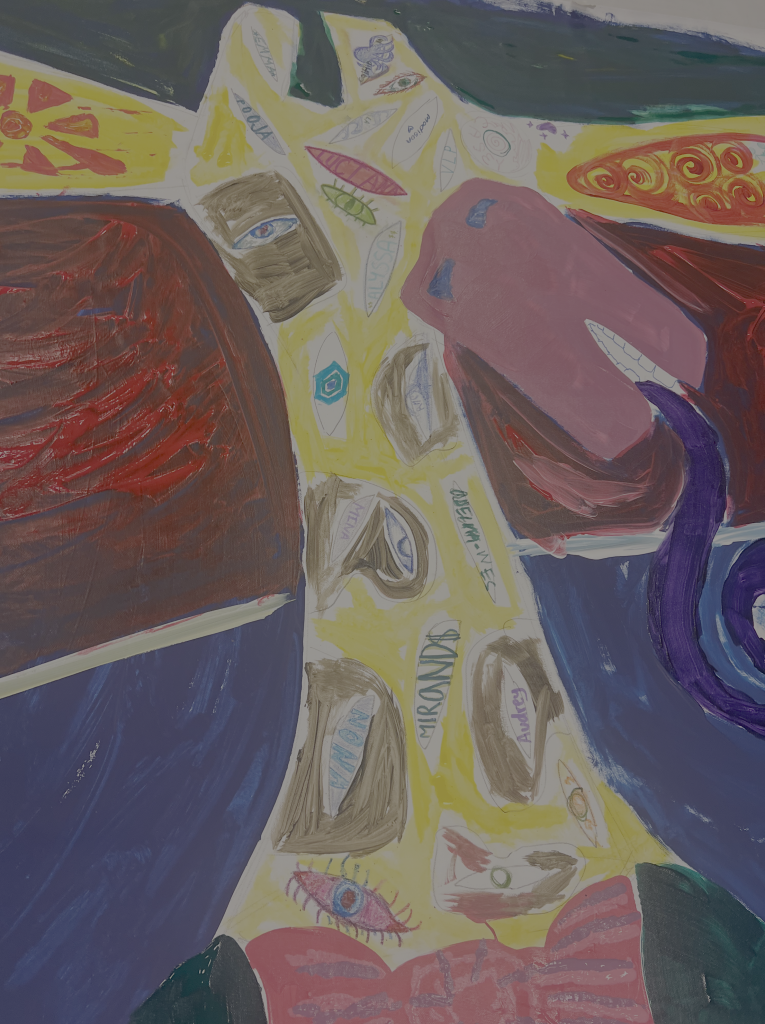
Central to the discussion was the idea that the unified, singular self is a historical and colonial construction, not a universal truth. His figures with many eyes witness its dissolution — a hospice moment for Western modernity — and propose instead that the self is an intersection, not a container, co-authored by ancestors, spirits, community, and nature. Students were concurrently working on individual projects exploring their own family histories.
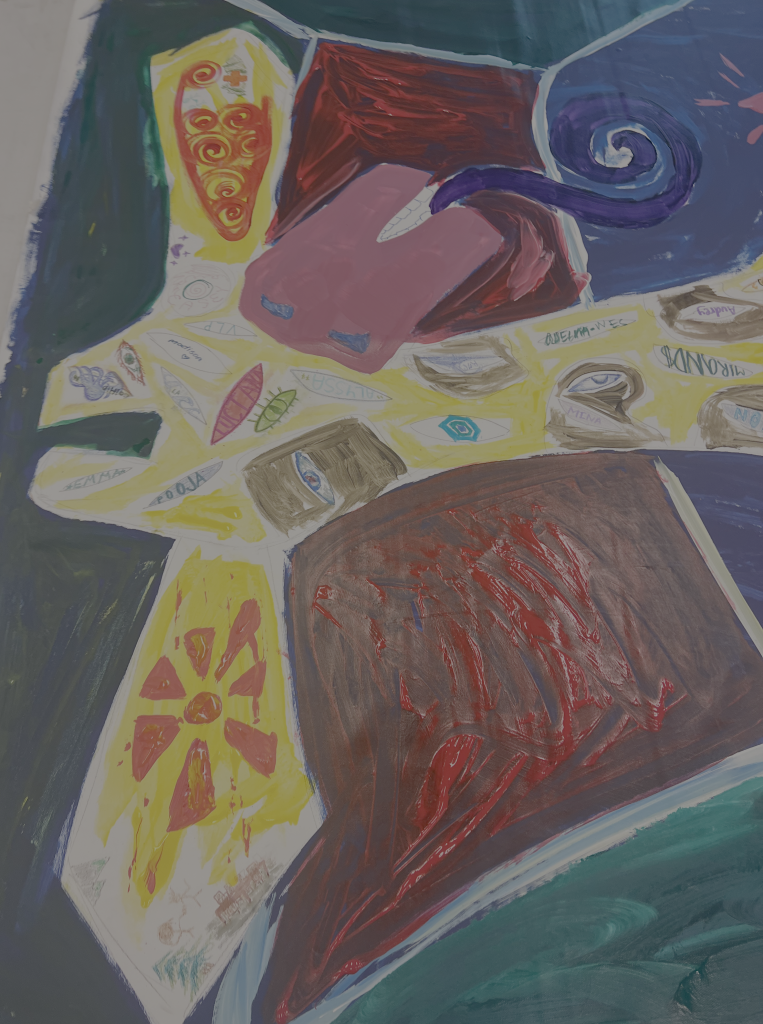
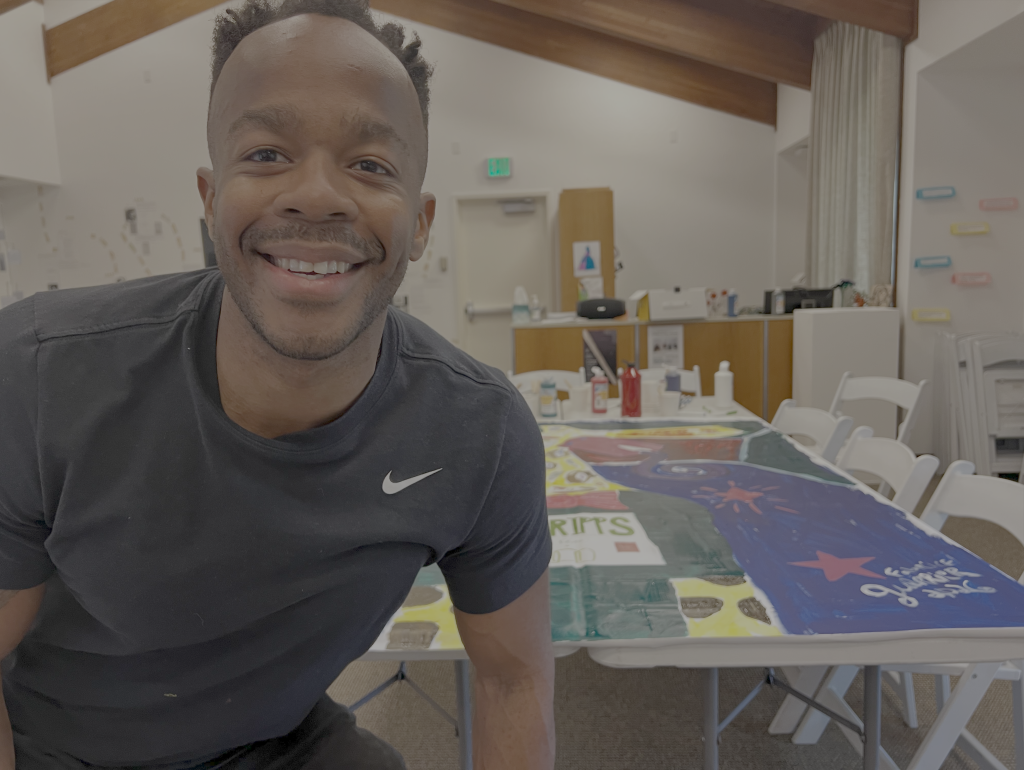
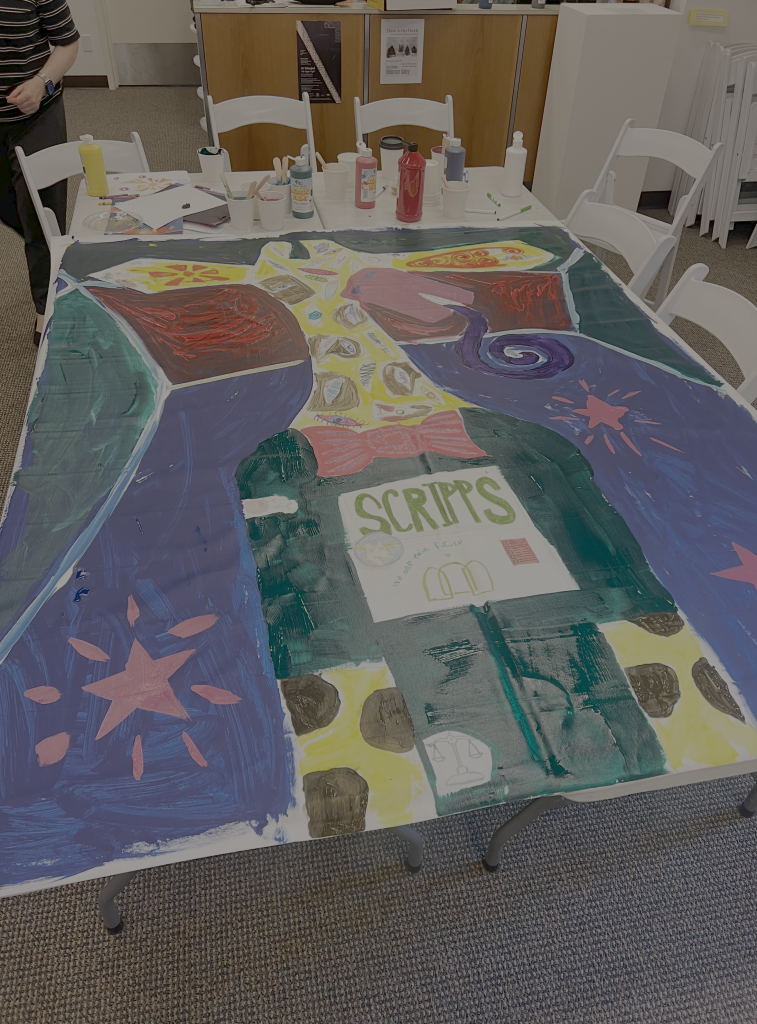
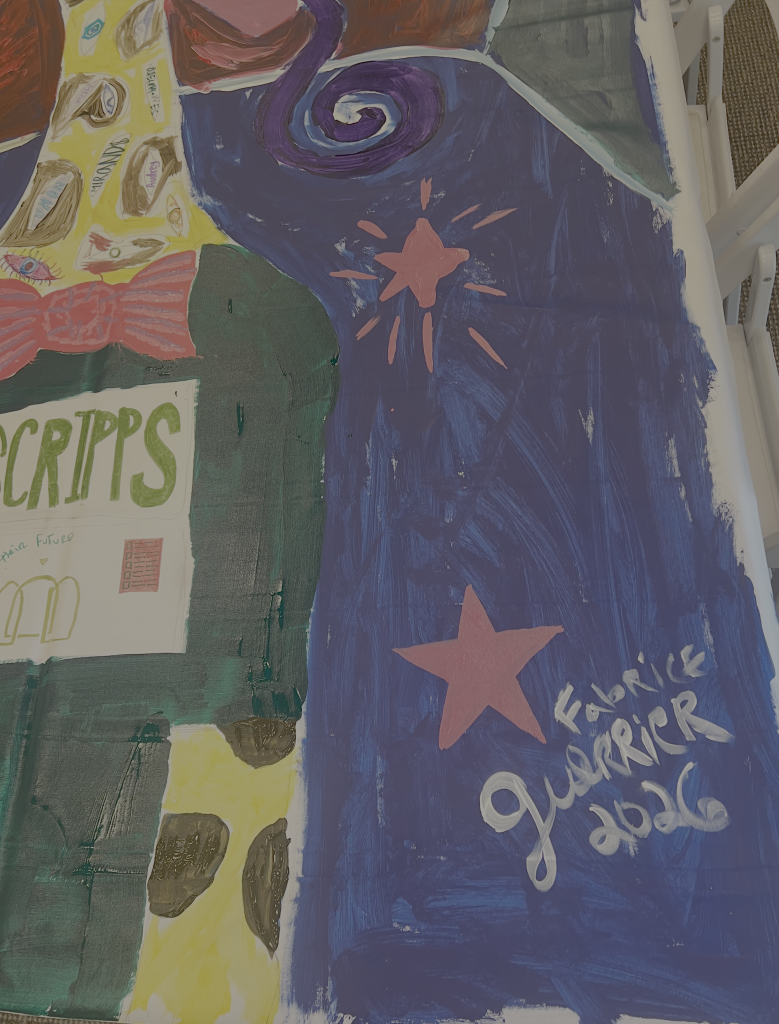
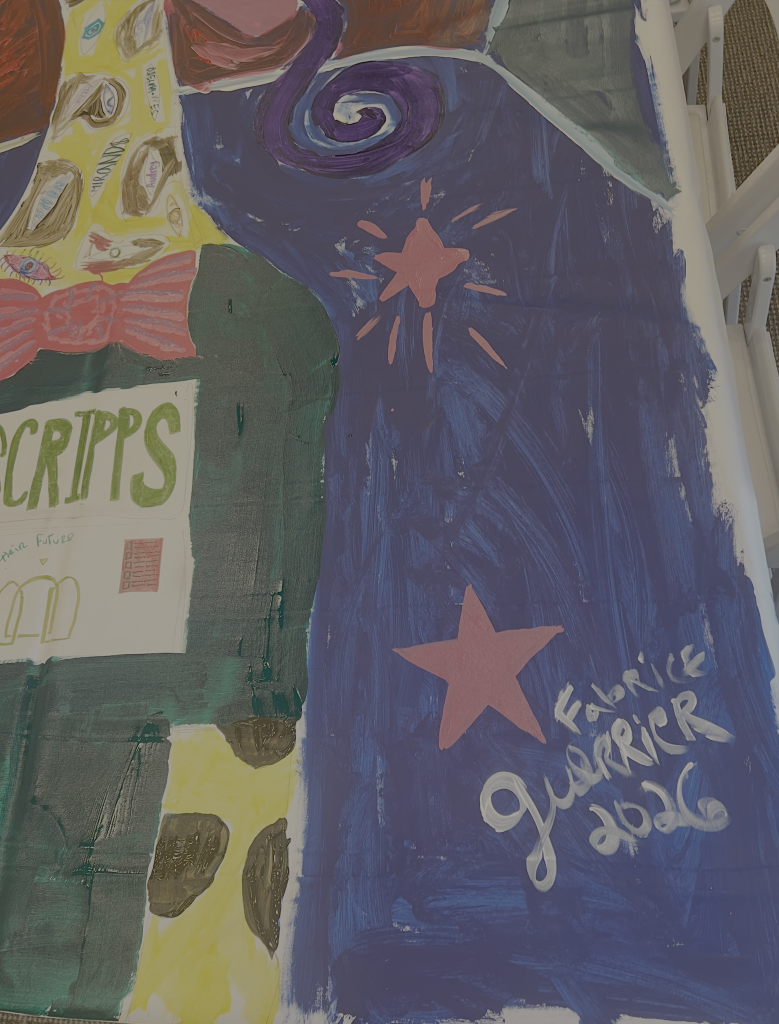
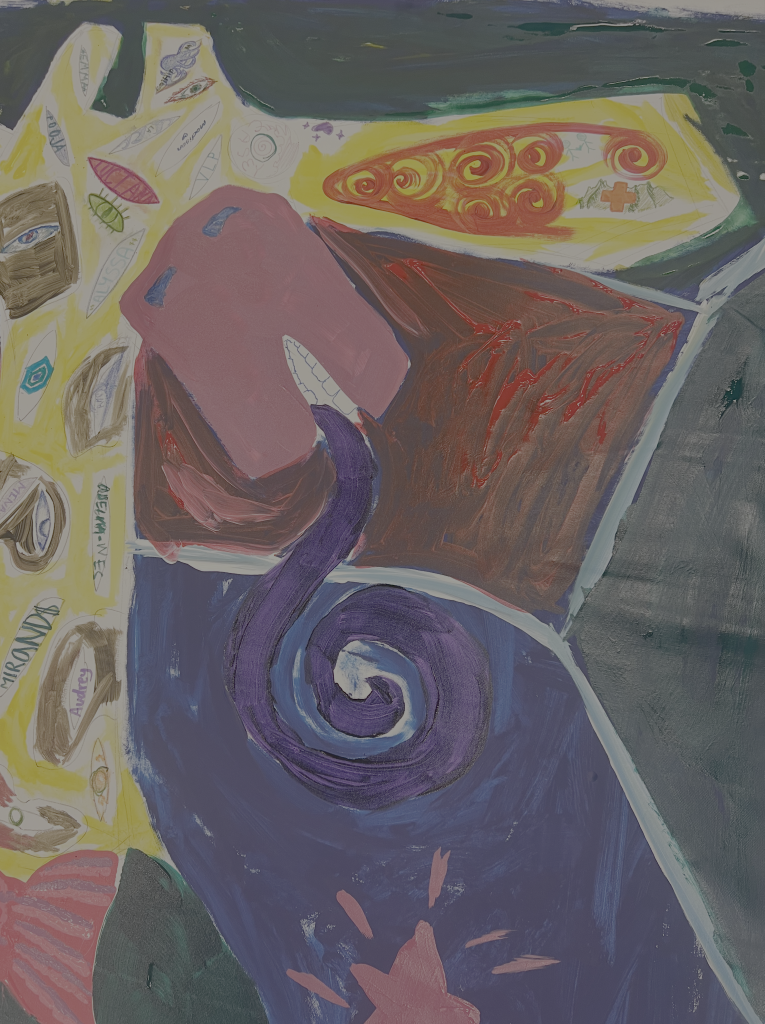
Fabrice then led a collaborative worldbuilding experience through Frank, co-creating an acrylic banner measuring 63″ wide x 6′ long. Students and faculty imagined their futures and encoded them as symbols woven into the banner — a participatory artwork that asked: what futures do we actually want?
Date: February 23, 2026 & February 25, 2026
Field Notes From Fabrice:
When I entered the room, many of the students were quiet and reserved — but they began to open up as they shared the research they had uncovered about their own family histories and lineage. One student’s grandparents had been held in a Japanese internment camp. Another traced a story of immigration to the United States. A third carried the history of grandparents who survived and escaped the Holocaust.
As I led them through a conversation and embodied imagination exercise, I drew connections between their individual histories and the theoretical core of my artistic practice: the ecological nature of the self — the idea that we are co-authored by history, nature, ancestors, and culture. The students quickly opened up, sharing the divergent forces that had shaped their identities.
When we moved into the creative portion on Wednesday, I grounded the work in that same framework: that understanding the ecological nature of self, and recognizing the many eyes within us, is precisely how we are able to claim and see new futures and realities.
What followed left me in awe — this was my first and largest participatory art project involving so many people co-creating a single canvas together. Students and faculty were broken into small groups and tasked with translating the futures they wanted into specific symbols.
Those symbols were added to the Frank the Giraffe canvas, where different colors and parts of Frank’s body represented different dimensions of imagination. Each participant was assigned a specific eye that codified their own personal vision of the future they wanted for their lives.
I left elated. The faculty present had participated too.
Partner acknowledgment: With gratitude to Anne Hurley, Director of the Clark Humanities Museum at Scripps College, and to Professors Westenley Alcenat and Ryan Milov-Cordoba.